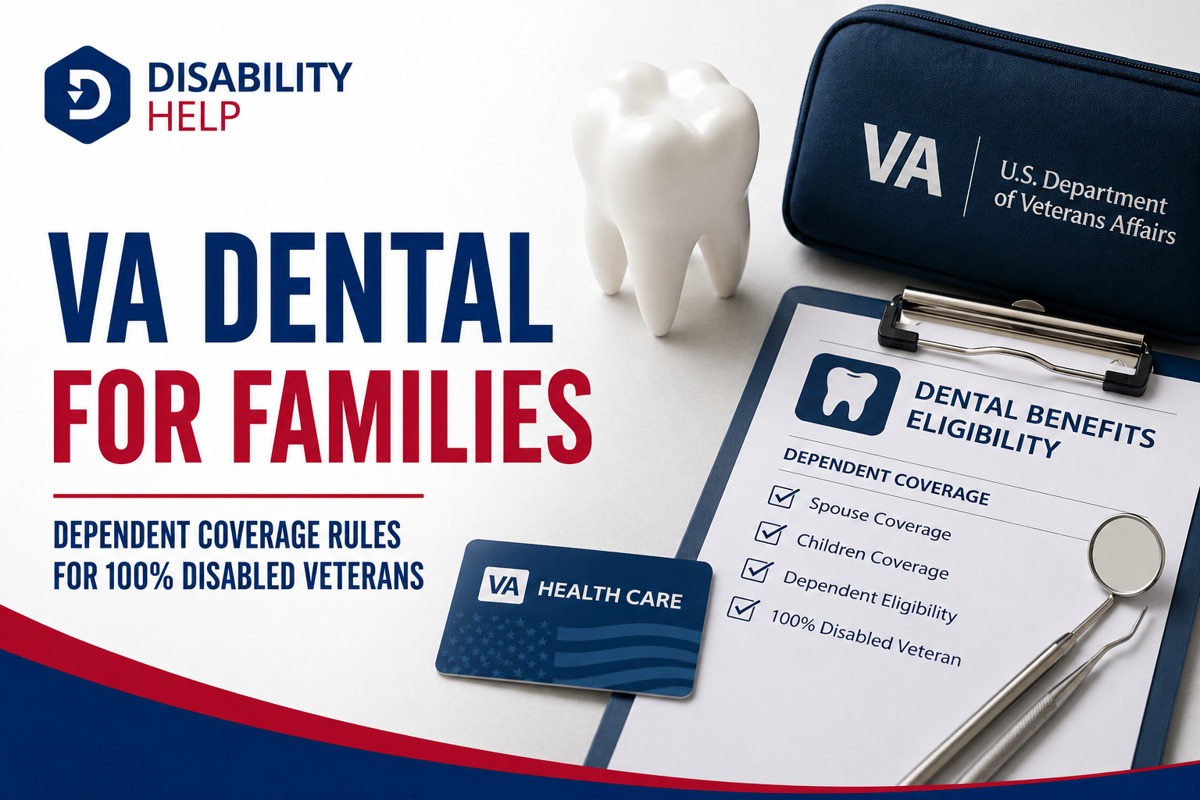
No. A 100% VA disability rating does not include free dental care for dependents. While the veteran receives comprehensive, no-cost dental coverage at this rating level, spouses and children must enroll in a separate program to access dental benefits. Most families fill this gap through the VA Dental Insurance Program (VADIP), which offers discounted private dental plans through Delta Dental and MetLife. According to the U.S. Department of Veterans Affairs, VADIP coverage is available year-round to dependents enrolled in CHAMPVA, and monthly premiums in 2026 start at roughly $21.50 for the lowest-tier Delta Dental plan.
This guide explains what 100% disabled veterans actually receive in dental benefits, why CHAMPVA leaves routine dental care out, how VADIP works in 2026, and the exact steps to get your family covered.
Key Takeaways
- Veterans only: Free comprehensive VA dental care applies only to the veteran with a 100% Permanent and Total rating, not to dependents.
- CHAMPVA dental exclusion: CHAMPVA covers medical care for eligible dependents but excludes routine dental services like cleanings, fillings, and orthodontics.
- VADIP fills the gap: The VA Dental Insurance Program offers discounted private dental plans for CHAMPVA-enrolled spouses and dependent children.
- 2026 premium range: VADIP monthly premiums in 2026 run from about $21.50 to $194, depending on carrier, plan, and family size.
- Two carriers: VA contracts with Delta Dental (three plan tiers) and MetLife (two plan tiers) to provide nationwide VADIP coverage.
- Year-round enrollment: VADIP has no open season, so CHAMPVA-eligible dependents can enroll at any time directly through the carrier.
- Medical-related exception: CHAMPVA will cover dental work only if it is directly tied to a covered non-dental medical condition.
What VA Dental Care Does a 100% Disabled Veteran Actually Receive?
A veteran rated 100% Permanent and Total (P&T) for a service-connected disability qualifies for any needed dental care at no cost through the Department of Veterans Affairs. This Class IV benefit covers preventive, restorative, and surgical dental services delivered at VA dental clinics or through authorized community providers.
The rating matters. A temporary 100% rating, such as one granted during hospitalization or convalescence, does not qualify a veteran for Class IV dental benefits. The rating must be permanent and total, or the veteran must be receiving payment at the 100% rate through Total Disability Individual Unemployability (TDIU).
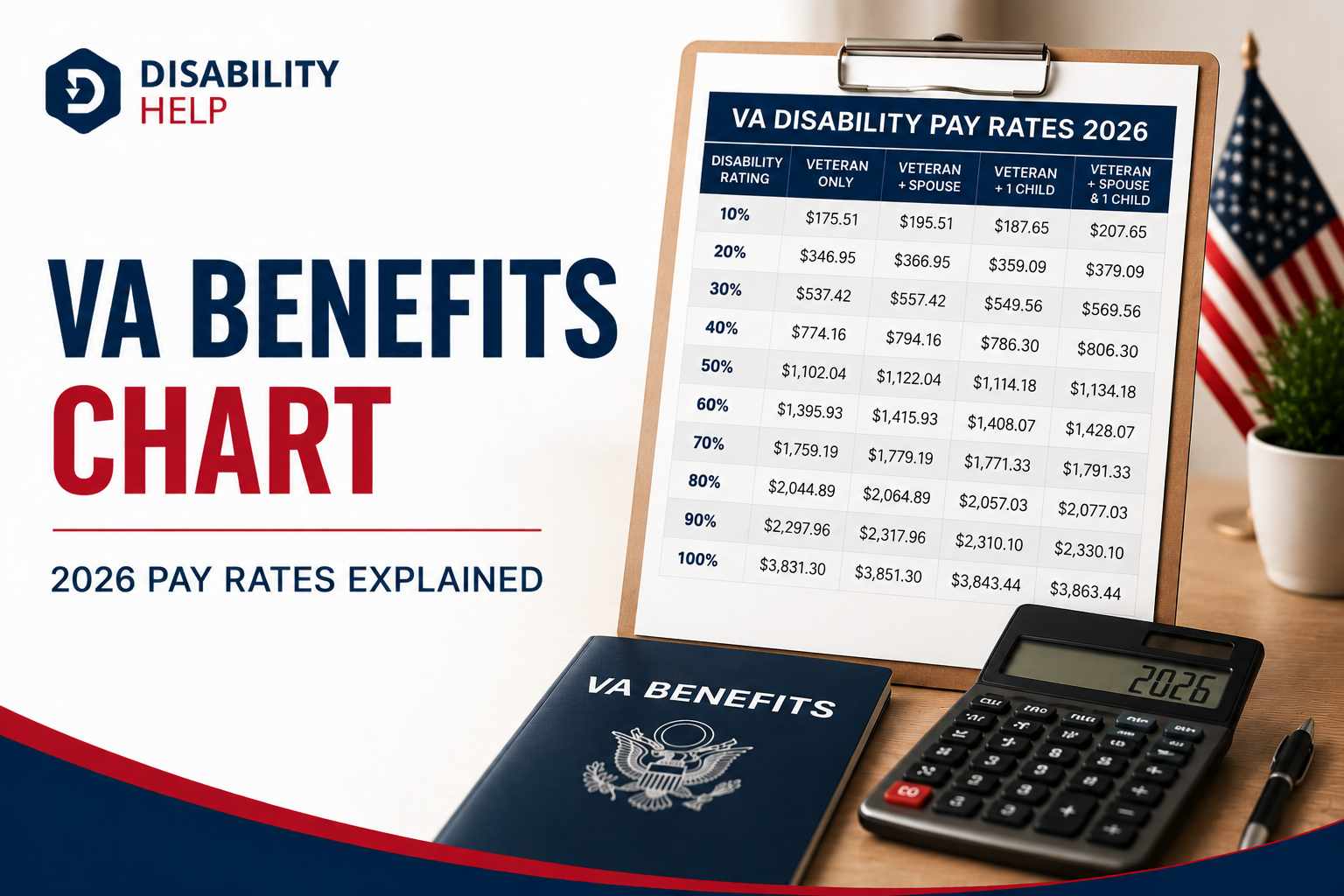
What the benefit includes is broad. Veterans receive cleanings, exams, x-rays, fillings, root canals, crowns, dentures, periodontal care, and oral surgery without copayment. The 2026 monthly compensation rate for a single veteran at the 100% disability level is $3,938.58, and a veteran with a spouse, child, and two dependent parents can receive up to $4,671.46 per month according to the VA's current disability compensation rates. The dental benefit is paid in addition to that compensation. It is not a cash benefit; it is direct access to dental care through the VA system.
What the benefit does not include is anyone else in the household. A spouse cannot walk into a VA dental clinic and receive care under the veteran's rating. A dependent child cannot get cleanings or braces through the VA system based on a parent's disability. The 100% rating creates an individual entitlement, not a family benefit.
Why CHAMPVA Does Not Cover Routine Dental Care for Dependents
CHAMPVA, the Civilian Health and Medical Program of the Department of Veterans Affairs, provides medical coverage for spouses, surviving spouses, and dependent children of veterans who are permanently and totally disabled due to a service-connected condition. According to the VA's CHAMPVA benefits page, CHAMPVA covers hospital care, outpatient services, prescription drugs, mental health treatment, and maternity care. It does not cover routine dental care.
This exclusion is written into the program guide. The official CHAMPVA Guidebook explicitly lists cleanings, exams, fillings, dentures, and braces as services not covered. The reason is structural: CHAMPVA inherited the medical-only coverage framework from earlier federal health programs, which historically treat dental care as a separate insurance category.
There is a narrow exception. CHAMPVA will cover dental procedures that are directly related to a covered medical condition. Examples include treatment for gingival hyperplasia caused by medication, loss of jaw substance from a covered medical procedure, or temporomandibular joint (TMJ) dysfunction that meets the program's medical-necessity standard. These exceptions are not the norm. For the vast majority of dependents, routine dental needs fall outside CHAMPVA entirely.
How the VA Dental Insurance Program (VADIP) Works for Families in 2026
The VA Dental Insurance Program (VADIP) is the official pathway for dependents of disabled veterans to obtain dental coverage at negotiated group rates. The program is a permanent benefit with no enrollment deadline and no open season. CHAMPVA-enrolled spouses and dependent children can sign up at any time of year.
VADIP is not free. It is discounted. The VA's role is to negotiate group pricing with two private carriers, Delta Dental and MetLife. Enrollees pay the full monthly premium directly to the insurance company and are also responsible for any copayments, deductibles, or out-of-pocket costs the plan requires. The discount comes from group purchasing power, not federal subsidies.
VADIP plans cover a broad range of services, including:
- Diagnostic services such as exams and X-rays
- Preventive care, including cleanings and fluoride treatments
- Restorative services like fillings, crowns, and root canals
- Dental surgery and extractions
- Emergency dental care
- Orthodontia for dependent children (limited to MetLife's High plan, available through age 19, with a 24-month waiting period)
Geographic coverage is nationwide. VADIP plans are accepted in all 50 states plus Puerto Rico, Guam, the U.S. Virgin Islands, American Samoa, and the Commonwealth of the Northern Mariana Islands. VA News confirms that the program was designed specifically to bridge the dental coverage gap for CHAMPVA beneficiaries, who otherwise have no built-in dental option.
A point worth noting: insurance carriers may offer separate, non-VADIP commercial dental plans for dependents who do not qualify for CHAMPVA. These plans are not part of the discounted VADIP program but may still be available as an option. Contact Delta Dental or MetLife directly to ask about non-VADIP options if a dependent is not CHAMPVA-eligible.
How Do Delta Dental and MetLife VADIP Plans Compare?
The two VADIP carriers structure their plans differently. Delta Dental offers three tiers, and MetLife offers two. Premium ranges, deductibles, annual maximums, and waiting periods vary by plan and carrier. The table below provides a high-level comparison of the carriers' 2026 VADIP offerings. Specific premium rates depend on geographic location, the number of dependents covered, and the chosen plan tier.
| Feature | Delta Dental VADIP | MetLife VADIP |
|---|---|---|
| Plan tiers | 3 (Enhanced, Comprehensive, Prime) | 2 (Standard, High) |
| Monthly premium range | $21.50 to $169 (single enrollee, varies by zip code) | $28 to $194 (single enrollee, varies by zip code) |
| Annual deductible | $0 to $50 per enrollee (waived for preventive) | $50 per enrollee on the Standard plan |
| Annual benefit maximum | $1,000 to $1,500, depending on tier | Varies by plan tier |
| Provider network | Nationwide Delta Dental network | 370,000+ participating locations |
| Orthodontia for children | Not covered under Delta Dental VADIP plans | Available on High plan, through age 19 (24-month wait) |
| Major service waiting period | 9 months for crowns, bridges, implants | No waiting period for major procedures |
| Enrollment window | Year-round | Year-round (12-month lock-in after enrolling) |
The right choice depends on the family's dental needs. Families that primarily need preventive and basic restorative care often find Delta Dental's Enhanced or Comprehensive plan sufficient. Families that anticipate major work like crowns, bridges, or orthodontia for a child may want the Prime plan or MetLife's High plan, both of which carry higher premiums but expand coverage and include orthodontic benefits for dependent children.
How to Enroll a Dependent in VADIP: A Step-by-Step Guide
Enrollment is handled directly through the insurance carrier, not through the VA itself. The VA verifies CHAMPVA eligibility, but the application, premium payment, and policy administration happen entirely with Delta Dental or MetLife. The process is straightforward.
- Confirm CHAMPVA enrollment first. Before applying for VADIP, the dependent must be actively enrolled in CHAMPVA. If enrollment is pending, complete that step using VA Form 10-10d. CHAMPVA enrollment is the gateway to VADIP eligibility.
- Compare the two carriers. Visit the Delta Dental VADIP portal and the MetLife VADIP portal. Each carrier displays current monthly premium rates by zip code, plan details, deductibles, annual maximums, and waiting periods. Compare side by side based on the family's anticipated dental needs.
- Choose a plan tier. Within the chosen carrier, select a plan based on cost and coverage. Lower tiers cost less and cover preventive care fully, but include lower annual maximums and longer waiting periods for major work. Higher tiers cost more but expand coverage.
- Complete the online application. Applications are submitted directly on the carrier's website. The enrollee must be 18 or older to self-enroll. For minor children, a parent or legal guardian completes the enrollment.
- Pay the first monthly premium. Coverage begins after the initial premium is processed by the carrier. Premiums are billed monthly, and the VA does not bill or collect VADIP payments.
- Schedule the first appointment. Once coverage is active, family members can see in-network dentists immediately for diagnostic and preventive services. Waiting periods apply to major services, so plan accordingly.
Per VA guidance, MetLife enrollees are locked into the chosen plan for 12 months before any changes can be made. Delta Dental has similar plan-level waiting periods for major services such as crowns and implants. Read each carrier's terms before enrolling.
Key Terms Every Veteran Family Should Know
Understanding the program vocabulary makes the application process easier and protects against common misconceptions.
100% Permanent and Total (P&T): A VA disability rating indicating a service-connected condition is total and not expected to improve. This rating triggers eligibility for CHAMPVA and full VA dental care for the veteran.
TDIU (Total Disability Individual Unemployability): A determination that pays a veteran at the 100% rate even if the combined disability rating is lower, based on the inability to maintain substantially gainful employmentWork that provides a living wage and is within the capacity of an individual, including those with d.... TDIU recipients also qualify for Class IV dental benefits.
Class IV Dental Benefits: The VA dental benefit category that provides comprehensive, no-cost dental care to veterans rated 100% P&T or paid at the 100% rate via TDIU.
CHAMPVA: The Civilian Health and Medical Program of the VA. A medical coverage program for spouses and dependent children of veterans rated permanently and totally disabled from a service-connected condition. Does not cover routine dental.
VADIP: The VA Dental Insurance Program. Discounted private dental insurance available to CHAMPVA beneficiaries and veterans enrolled in VA health care. Premiums and copayments apply.
Annual Maximum: The total amount a dental plan will pay for covered services in a single benefit year. VADIP plan maximums range from $1,000 to $1,500, depending on tier.
Waiting Period: A period after enrollment during which certain services, typically major restorative work like crowns or bridges, are not yet covered. VADIP waiting periods commonly run 9 to 12 months.
When CHAMPVA Will Cover Dental Work for a Dependent
The general rule is that CHAMPVA excludes dental care. The exception is narrow but important: when a dental procedure is necessary to treat or directly relate to a covered medical condition, CHAMPVA may cover it. This exception is the only path to dental coverage through CHAMPVA itself, rather than through VADIP.
A few real-world examples from the CHAMPVA program guide illustrate where the exception applies:
- Treatment of gingival hyperplasia caused by anti-seizure medications or other medical drug therapy
- Reconstruction of jaw substance lost due to a covered medical procedure or trauma
- Treatment for documented mercury hypersensitivity affecting existing dental work
- Surgical or medical treatment for TMJ dysfunction meeting CHAMPVA medical necessity criteria
These exceptions require documentation. The treating physician must establish the medical necessity, and the dental procedure must be tied directly to the underlying medical condition. Routine cleanings, fillings, extractions for non-medical reasons, dentures, and orthodontia all fall outside the exception.
For families working through a complex situation where a dependent's dental need may overlap with a covered medical condition, contact the CHAMPVA customer service line and request a pre-determination of coverage. This step protects against billing surprises later.
The Bottom Line for Veterans and Their Families
A 100% VA disability rating is one of the most valuable benefits the Department of Veterans Affairs provides, but its dental coverage applies to the veteran only. Dependents need a separate pathway, and that pathway in 2026 is VADIP. The program is permanent, available year-round, and structured around discounted private insurance through Delta Dental and MetLife.
As of 2026, the most direct route for a CHAMPVA-enrolled spouse or child to get dental coverage is to compare the two carriers' VADIP offerings on their official portals, choose a plan tier that fits the family's dental needs and budget, and enroll online. The veteran's own dental benefit stays intact and operates separately through VA clinics or authorized community providers.
For a broader look at family benefits tied to a 100% permanent and total rating, read Disability Help’s guide to VA 100% permanent and total disability benefits for dependents.
Frequently Asked Questions
Does a 100% VA disability rating cover dental for my spouse?
No. The free comprehensive dental benefit attached to a 100% Permanent and Total VA disability rating applies only to the veteran. A spouse cannot receive dental care through the VA system based on the veteran's rating. Spouses can access dental coverage by enrolling in VADIP if they are also enrolled in CHAMPVA.
Can my children get dental care through my VA benefits?
Not directly. A 100% disabled veteran's dental benefit does not extend to dependent children. Children who are enrolled in CHAMPVA can be added to a VADIP plan, and MetLife's High plan includes orthodontia coverage for dependent children up to their 19th birthday with a 24-month waiting period.
Is VADIP free for CHAMPVA dependents?
No. VADIP offers discounted private dental insurance, not free coverage. Enrollees pay the full monthly premium plus any deductibles or copayments their plan requires. The discount comes from group pricing negotiated by the VA, not from federal subsidies.
How much does VADIP cost in 2026?
Monthly premiums vary by carrier, plan tier, geographic location, and family size. In 2026, premiums range from approximately $21.50 for the lowest-tier Delta Dental plan to $194 for higher-tier MetLife coverage with multiple dependents. Use the Delta Dental and MetLife VADIP portals to get an exact quote for your zip code.
Can I enroll in VADIP if my dependent is not in CHAMPVA?
Not through the official VADIP program. The discounted rates negotiated by the VA require CHAMPVA enrollment as a prerequisite. However, Delta Dental and MetLife offer separate commercial dental plans that any individual can purchase at standard market rates. Contact the carrier directly for non-VADIP options.
What if my dependent needs dental work tied to a medical condition?
CHAMPVA will cover dental procedures only when they are directly tied to a covered non-dental medical condition. Examples include reconstruction following a covered medical procedure or treatment for gingival hyperplasia caused by medication. Request a pre-determination from CHAMPVA before scheduling the procedure to confirm coverage.
Does TDIU give the same dental benefits as a 100% schedular rating?
Yes for the veteran. A veteran receiving payment at the 100% rate through Total Disability Individual Unemployability (TDIU) qualifies for Class IV VA dental care. The same rule applies to dependents: TDIU does not extend dental benefits to spouses or children. CHAMPVA and VADIP remain the path for family dental coverage.
- "CHAMPVA." Benefits.gov, U.S. Department of Labor, www.benefits.gov/benefit/318.
- "Dental Insurance." U.S. Department of Veterans Affairs, U.S. Department of Veterans Affairs, www.va.gov/health-care/about-va-health-benefits/dental-care/dental-insurance/