Secondary conditions for VA tinnitusThe perception of noise or ringing in the ears, often without an external sound source. claims are the additional health problems your service-connected tinnitus causes or worsens, and they can raise your combined VA rating far above the 10% that tinnitus pays on its own. Tinnitus is the single most common service-connected disability in the United States, with more than 3.2 million veterans receiving compensation for it. The hard limit is that tinnitus is capped at 10%, no matter how loud or constant the ringing is. The real path to higher compensation runs through the conditions tinnitus sets off, such as anxiety, depressionA mental health condition marked by persistent feelings of sadness and loss of interest., insomnia, sleep apneaA sleep disorder characterized by repeated interruptions in breathing during sleep, often treated wi..., and migraines.
This guide explains which conditions qualify, how the secondary service connection works, and how to prove the link.
Key Takeaways
- Tinnitus is capped at 10%: Under Diagnostic Code 6260, recurrent tinnitus pays a flat 10%, about $180.42 per month in 2026, no matter how severe the symptoms are.
- Secondary conditions raise your rating: For VA tinnitus claims, conditions like anxiety, depression, insomnia, sleep apnea, and migraines each carry their own rating that combines with your 10%.
- The legal basis is 38 CFR 3.310: This regulation grants service connection for any condition that is proximately caused or aggravated by a service-connected disability.
- A nexus letter is the deciding evidence: A qualified doctor must state the secondary condition is at least as likely as not caused or worsened by your tinnitus.
- VA math is not simple addition: The VA combines ratings with a table in 38 CFR 4.25, so two conditions are worth less combined than their numbers added together.
- Mental health links are well documented: In one study of 91 veterans with tinnitus, 79.1% reported anxiety and 58.2% reported depression.
- File before the rules change: The VA has proposed folding standalone tinnitus into hearing lossPartial or total inability to hear sounds in one or both ears., but veterans with existing ratings would be grandfathered in.
Why Tinnitus Is Only the Starting Point for Your VA Claim
Tinnitus pays a flat 10% and nothing higher, so the goal is to build additional service-connected conditions on top of it. The VA rates recurrent tinnitus under 38 CFR 4.87, Diagnostic Code 6260, and assigns the same 10% whether the noise is in one ear, both ears, or in your head. There is no sliding scale and no bilateral factor.
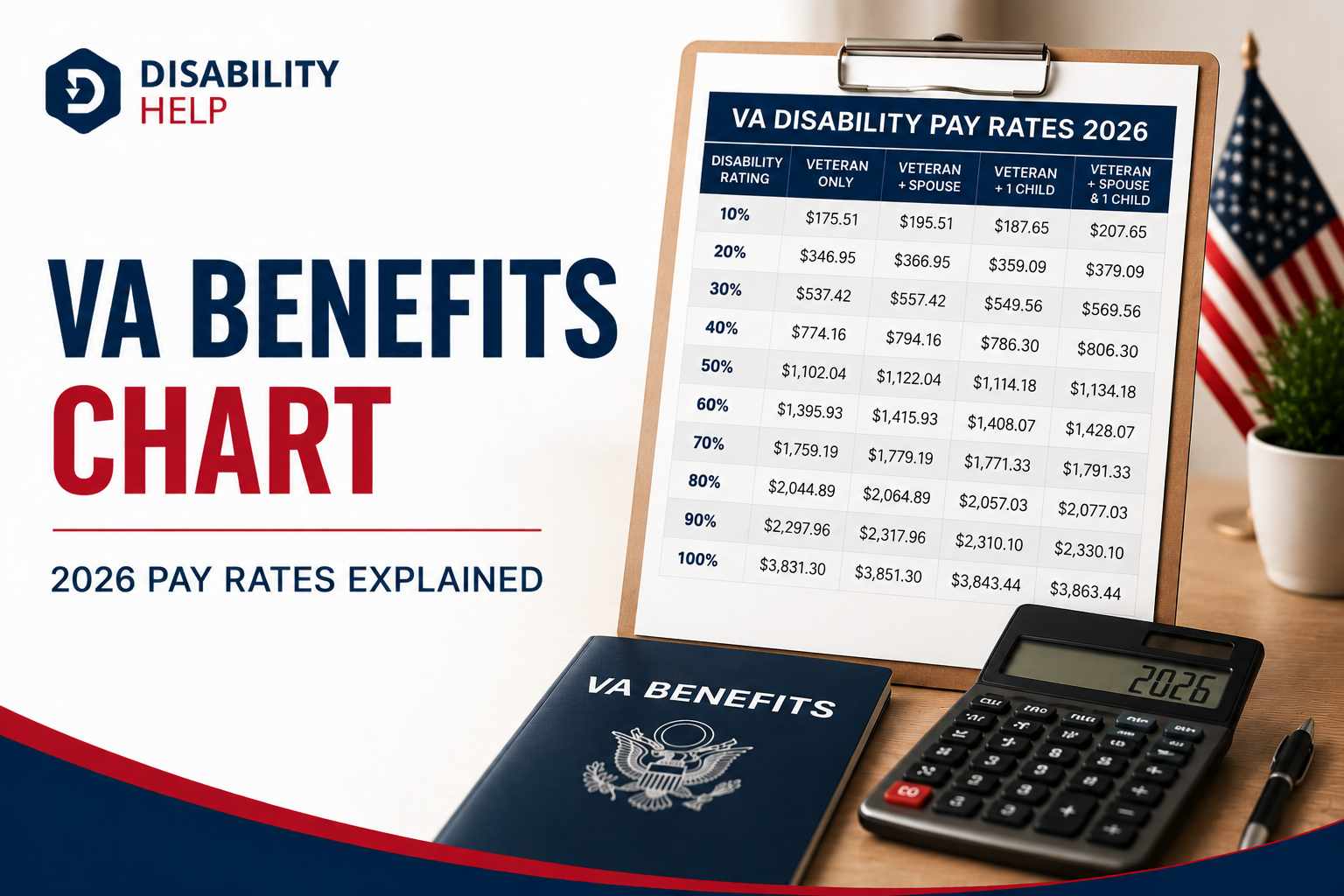
That 10% is worth about $180.42 per month in 2026 for a veteran with no dependents, after the 2.8% cost-of-living adjustment that took effect December 1, 2025. The figure is modest because the rating is small. The conditions tinnitus triggers, on the other hand, can each carry ratings of 30%, 50%, or more, which is where a claim gains real value.
Think of your service-connected tinnitus as a foundation. The foundation has a fixed value, but it can support a much larger structure. Every condition you can medically link back to that ringing becomes its own rated disability that combines into a higher monthly payment and broader benefits.
What Does Secondary Service Connection Mean?
Secondary service connection is the legal rule that lets a new condition qualify for compensation because a condition the VA already recognizes caused or worsened it. The rule lives in 38 CFR 3.310, which covers disabilities that are proximately due to, or aggravated by, a service-connected disease or injury. It creates two separate paths.
Direct causation. Under 38 CFR 3.310(a), any disability that is proximately due to or the result of a service-connected disability is itself service-connected. If your tinnitus directly causes chronic insomnia, that insomnia becomes part of your claim and earns its own rating.
Aggravation. Under 38 CFR 3.310(b), the VA must also grant service connection when a service-connected condition makes a pre-existing, non-service-connected condition worse than its natural progression. If you had mild anxiety before service and your tinnitus pushed it into a severe disorder, the increase in severity can be compensated.
Here is the key term to remember: the VA will not assume a connection just because you have both conditions. You have to prove the link with medical evidence, which is the job of the nexus letter covered later in this guide.
Which Secondary Conditions Are Most Commonly Linked to Tinnitus?
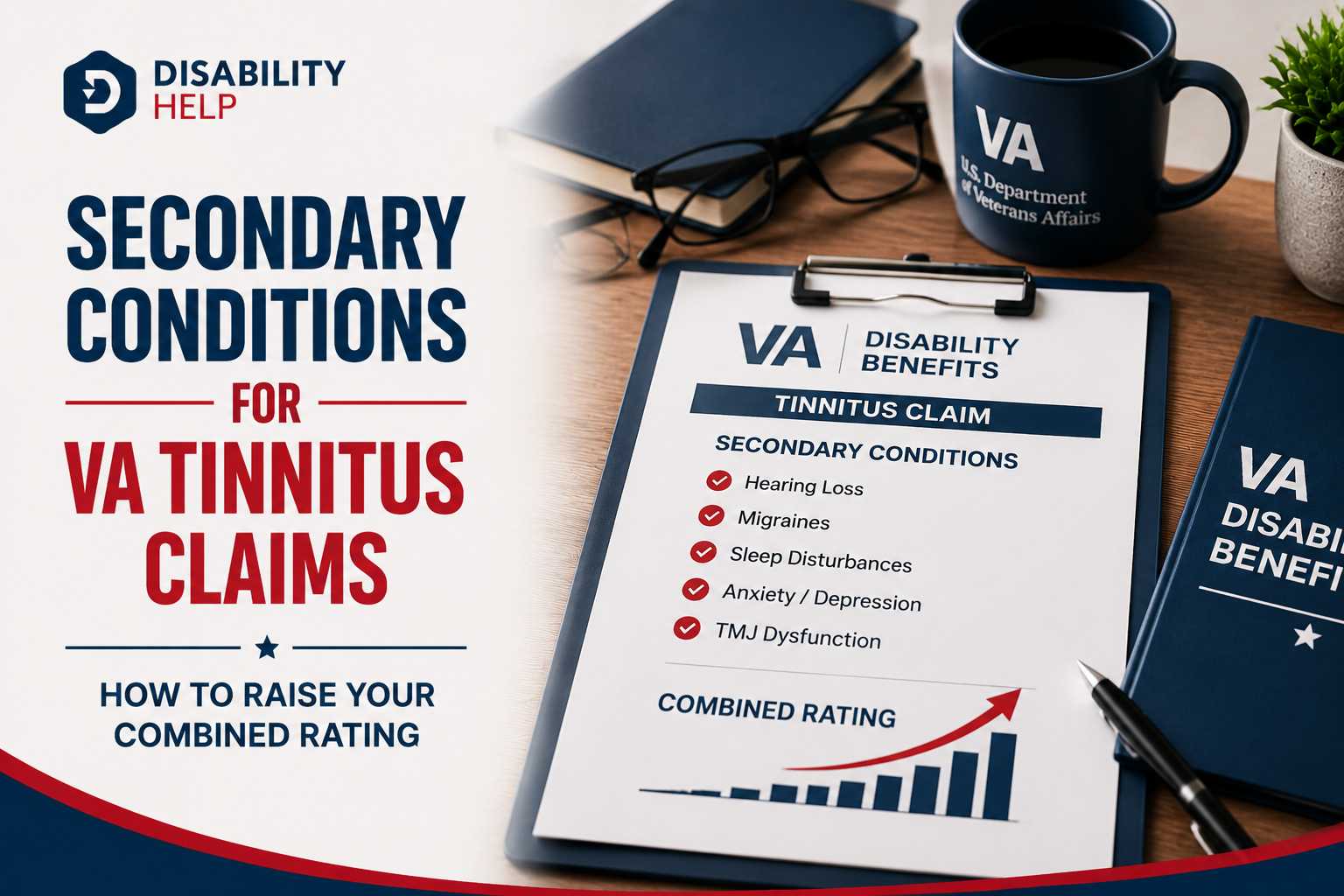
The conditions most often connected to tinnitus fall into three groups: mental health disorders, sleep disorders, and headache or hearing conditions. The table below shows how each one ties back to tinnitus, the diagnostic code the VA uses, and the rating range you can expect.
| Secondary Condition | How It Connects to Tinnitus | Diagnostic Code | Rating Range |
|---|---|---|---|
| Anxiety and Depression | Constant ringing disrupts focus, mood, and rest, which can trigger or worsen mental health disorders | DC 9400 / 9434 (38 CFR 4.130) | 0, 10, 30, 50, 70, 100% |
| Insomnia | Tinnitus is loudest in quiet rooms, making it hard to fall or stay asleep | Mental disorders formula (38 CFR 4.130) | 0, 10, 30, 50, 70, 100% |
| Obstructive Sleep ApneaA sleep disorder where breathing repeatedly stops and starts during sleep due to airway obstruction.... | Shared noise-exposure damage and disrupted sleep are tied to tinnitus | DC 6847 | 0, 30, 50, 100% |
| MigraineA neurological condition characterized by intense, debilitating headaches often accompanied by nause... Headaches | Sensory overload and stress from tinnitus can set off migraine attacks | DC 8100 | 0, 10, 30, 50% |
| Hearing Loss | Caused by the same acoustic trauma; rated on its own, then combined with tinnitus | DC 6100 | 0 to 100% (audiometric) |
| Somatic Symptom Disorder | Excessive fixation on the ringing causes real emotional distress and impairmentA loss or abnormality of a body structure or function, whether physical, mental, or sensory, often a... | 38 CFR 4.130 | 0, 10, 30, 50, 70, 100% |
Mental Health Disorders: Anxiety and Depression
The psychological weight of inescapable noise is the most common secondary path. In a 2015 study of 91 veterans diagnosed with tinnitus, 79.1% reported anxiety and 58.2% reported depression, with 58.2% experiencing both at once. The VA rates these conditions under the General Rating Formula for Mental Disorders at 0, 10, 30, 50, 70, or 100% based on how much they impair your work and social life.
Sleep Disorders: Insomnia and Sleep Apnea
Tinnitus is most noticeable in quiet rooms, which is why it wrecks sleep. The result is often chronic insomnia, and a cycle forms: sleep loss sharpens the perception of tinnitus, which then blocks more sleep. Insomnia is usually rated under the mental disorders formula.
Obstructive sleep apnea is the second sleep link. One study of 80 service members with noise-induced tinnitus found that 77% had significantly higher sleep disturbance scores than normal controls. Sleep apnea is rated under Diagnostic Code 6847 at 0, 30, 50, or 100%, with the 50% level historically assigned when a veteran needs a CPAP machine.
Migraine Headaches
There is a documented neurological tie between tinnitus and migraines. The American Migraine Foundation notes that migraines can produce allodynia, a heightened sensitivity that can aggravate tinnitus, and research has found migraine sufferers are roughly 2.1 times more likely to report tinnitus. The VA rates migraines under Diagnostic Code 8100 at 0, 10, 30, or 50%, with the top rating reserved for frequent, completely prostrating attacks that cause severe economic hardship.
Hearing Loss and Somatic Symptom Disorder
Hearing loss and tinnitus usually share the same cause: acoustic trauma to the auditory nerve. The VA rates hearing loss separately under Diagnostic Code 6100 on an audiometric scale, then combines it with your tinnitus rating rather than merging the two into one. Somatic symptom disorder is a less common but valid path, where an extreme, disproportionate focus on the ringing causes its own emotional distress and functional impairment.
How Combined Ratings Actually Work (VA Math)
The VA does not add your ratings together. It uses a combined ratings table in 38 CFR 4.25 that treats each new disability as a slice of your remaining healthy percentage, which is why the total is always lower than simple addition.
Here is the logic in plain terms. The VA starts at 100% healthy. Your highest rating comes off first. The next rating is applied only to what is left, not to the original 100%. The final number is rounded to the nearest 10%.
| Your Service-Connected Conditions | If You Simply Add | VA Combined Value | Official Rounded Rating |
|---|---|---|---|
| Tinnitus 10% only | 10 | 10 | 10% |
| Tinnitus 10% + sleep apnea 30% | 40 | 37 | 40% |
| Tinnitus 10% + depression 50% | 60 | 55 | 60% |
| Tinnitus 10% + depression 50% + sleep apnea 30% | 90 | 69 | 70% |
Notice the jump in that last row. Adding depression and sleep apnea to your 10% tinnitus rating moves you from 10% to a 70% combined rating, a difference of thousands of dollars per year. A combined rating of 50% or higher also places you in VA Priority Group 1 healthcare, which removes copays for care and medications tied to your service-connected conditions.
How to Build a Strong Secondary Claim, Step by Step
A secondary claim succeeds when you connect the dots clearly and back each one with evidence. Follow these claim steps in order.
- Confirm your tinnitus is service-connected. You need the primary 10% rating in place first, since it is the anchor every secondary condition links back to.
- Get a current diagnosis. A qualified provider, such as a psychiatrist for anxiety or a sleep specialist for apnea, must formally diagnose the secondary condition.
- Obtain a nexus letter. Have the provider write a medical opinion stating the condition is at least as likely as not caused or aggravated by your tinnitus.
- Gather supporting evidence. Collect treatment records, a symptom journal, and lay statements from family or fellow service members describing the daily impact.
- File on VA Form 21-526EZ. Submit the claim and clearly identify the new condition as secondary to your service-connected tinnitus.
- Prepare for your C&P exam. Describe the functional impact honestly and consistently, focusing on how the condition limits work and daily life.
- Appeal if denied. Many secondary denials are reversed with a stronger nexus letter, so a first denial is not the end of the claim.
Veterans service organizations such as the DAV, VFW, and American Legion help file these claims at no cost, and VA-accredited representatives generally cannot charge a fee to prepare your initial claim.
The Nexus Letter: The Evidence That Wins Secondary Claims
The nexus letter is the single most important document in a secondary claim. It is a detailed report from a qualified medical professional that explicitly ties the new condition to your service-connected tinnitus. Without a sound nexus letter, a secondary claim is almost always denied.
A strong nexus letter does four things. It is written by a professional with relevant expertise. It states that the author reviewed your complete medical and service records. It gives a clear medical rationale explaining how and why tinnitus causes or worsens the condition, citing medical literature where it helps. And it uses the controlling legal standard: the condition is at least as likely as not, meaning a 50% or greater probability, connected to your tinnitus.
Those words matter. A letter that says a connection is merely possible falls short of the standard. A letter that says at least as likely as not meets it. Because tinnitus and mental health conditions rely heavily on your own reporting, the rationale in the letter often carries as much weight as the diagnosis itself.
What to Expect at Your C&P Exam
When you file a secondary claim, the VA usually schedules a Compensation and Pension exam. The examiner completes a Disability BenefitsFinancial assistance provided to individuals who are unable to work due to a disability, such as Soc... Questionnaire that heavily shapes the rater's final decision, so the exam is not a formality. Treat it as a chance to show the real impact of your condition.
Conditions like tinnitus and depression depend on what you report, which makes your testimony central. Do not simply say you feel sad or tired. Explain how the constant ringing keeps you from concentrating at work, pulls you away from your family, and erodes your quality of life. Describe your symptoms on your worst days, and stay honest and consistent without exaggerating or downplaying them.
Proposed 2026 Changes to the Tinnitus Rating
You should know about a rule change the VA has proposed. The agencyThe capacity of individuals with disabilities to act independently and make their own choices. wants to eliminate the standalone 10% rating under Diagnostic Code 6260 and instead evaluate tinnitus alongside hearing loss under Diagnostic Code 6100. Under the proposal as written, a veteran could still earn a separate 10% for tinnitus only when hearing loss is rated at 0%.
As of 2026, the VA has not finalized this rule, and two points reassure current claimants. First, veterans who already hold a tinnitus rating would be grandfathered in, so existing compensation would not be cut. Second, the pathway for secondary conditions stays intact. Migraines, anxiety, depression, and sleep disorders that stem from tinnitus would remain eligible for secondary compensation. The practical takeaway is simple: if you have tinnitus and have not filed, file now to lock in service connection under the current rules.
A Real Example: Migraines Secondary to Tinnitus
Case examples show how these claims play out. In one decision, the Board of Veterans' Appeals granted service connection for migraines as secondary to a veteran's already service-connected tinnitus. The veteran had the primary 10% tinnitus rating in place, then submitted a Disability Benefits Questionnaire documenting that the tinnitus was aggravating the migraines, supported by a physician's rationale that cited research linking the two conditions.
That pattern is the template for a winning secondary claim. The primary rating came first. A medical professional supplied the rationale and the nexus. Multiple records reinforced the link. The result was a new rating that combined with the original 10% to raise the veteran's overall compensation. This example is illustrative rather than a guarantee, since every claim turns on its own evidence, but it shows what the VA looks for.
How to Turn a 10% Tinnitus Rating Into a Higher VA Disability Award
Tinnitus is more than a ringing in your ears. It is a gateway condition that can drag your mental and physical health down with it, and the VA recognizes that reality through secondary service connection. The 10% rating is the floor, not the ceiling.
As of 2026, the smartest move is to act while the current rules are in force. Confirm your tinnitus service connection, identify the conditions it has caused or worsened, and secure a nexus letter for each one.
When you are ready to take the next step, our Veterans Disability resources walk you through the statute of limitations for disability discrimination claims so you can pursue the full compensation you earned through your service.
Frequently Asked Questions
Can I get more than 10% for tinnitus?
Not for tinnitus alone. Diagnostic Code 6260 caps recurrent tinnitus at a flat 10% regardless of severity. You can raise your overall compensation only by service-connecting additional conditions, including secondary conditions caused or aggravated by the tinnitus, which then combine with your 10%.
What is the most commonly approved secondary condition to tinnitus?
Mental health disorders and sleep disorders lead the list. Anxiety, depression, and insomnia are frequently linked to the stress and sleep disruption that tinnitus creates. Migraines and sleep apnea are also common and well supported by medical research, which makes them strong candidates when you have a clear nexus.
Do I need a nexus letter for a secondary tinnitus claim?
In almost every case, yes. The VA will not presume a link between two conditions just because you have both. A nexus letter from a qualified provider, stating the condition is at least as likely as not connected to your tinnitus, is the evidence that turns a possible link into an approved claim.
Will the proposed tinnitus rule change affect my secondary claims?
No. Even if the VA finalizes the change to Diagnostic Code 6260, the pathway for secondary conditions remains in place, and veterans with existing tinnitus ratings would be grandfathered in. Conditions like migraines, anxiety, and depression that stem from tinnitus would still qualify for secondary compensation.
How much can secondary conditions increase my VA pay?
It depends on the combined rating. A 10% tinnitus rating plus a 50% mental health rating combine to 60%, which pays far more than 10% alone. A combined rating of 50% or higher also qualifies you for Priority Group 1 healthcare.
- Langguth, B., Hund, V., Landgrebe, M., & Schecklmann, M. (2017). "Tinnitus Patients with Comorbid Headaches: The Influence of Headache Type and Laterality on Tinnitus Characteristics." Frontiers in Neurology, 8. https://doi.org/10.3389/fneur.2017.00440.
- Hu, Jinwei, et al. "The Correlation of the Tinnitus Handicap Inventory with Depression and Anxiety in Veterans with Tinnitus." International Journal of Otolaryngology, vol. 2015, 2015, Article ID 689375, doi:10.1155/2015/689375
- "VA claim exam (C&P exam) | Veterans Affairs." Veterans Affairs, 9 June 2023, https://www.va.gov/disability/va-claim-exam/. Accessed [02 Nov. 2023]
- "Meniere’s Disease Treatment Market Research, Size, Share, Trends, Global Analysis, 2030." Market Research Future, 2023, https://www.marketresearchfuture.com/reports/menieres-disease-market-3991. Accessed [02 Nov. 2023]
- American Tinnitus Association. "Tinnitus and the Military." American Tinnitus Association, www.ata.org/understanding-facts.
- National Institute on Deafness and Other Communication Disorders. "Tinnitus." National Institute on Deafness and Other Communication Disorders, www.nidcd.nih.gov/health/tinnitus.
- Gallus, S., et al. "Tinnitus and risk of Alzheimer's and Parkinson's disease: a retrospective nationwide cohort study." Scientific Reports, vol. 5, 2015, www.nature.com/articles/srep11490.
- Schecklmann, M., et al. "Tinnitus and depression comorbidity." Progress in Brain Research, vol. 207, 2013, pp. 163-176, www.sciencedirect.com/science/article/pii/B9780444632530000072.