The best law firms for veteran disability claims share four traits you can verify before you sign anything: current VA accreditation, appellate experience before the Board of Veterans' Appeals, a transparent contingency fee, and a track record in cases like yours. RepresentationThe way people with disabilities are depicted in media, culture, and politics, often influencing pub... matters because it changes outcomes. According to the Board of Veterans' Appeals FY2024 Annual Report, veterans with an accredited attorney won roughly 43% of Board appeals, compared with fewer than 30% for veterans with no representative.
This guide compares ten leading VA disability law firms, separates verified credentials from marketing claims, and shows you how to choose the right firm (and when a free Veterans Service Organization is enough). Before you commit to anyone, verify their accreditation on the VA Office of General Counsel roster.
Key Takeaways
- Representation improves odds: Veterans with an accredited attorney won about 43% of Board appeals in FY2024, versus under 30% for those without a representative.
- Accreditation is the baseline: Every reputable firm uses VA-accredited attorneys, a credential you can confirm free on the VA Office of General Counsel roster.
- Fees are regulated: A fee of 20% or less of past-due benefits is presumed reasonable and may qualify for direct payment by VA. Fees above 33⅓% are presumed unreasonable.
- Marketing stats are self-reported: Advertised win rates and recovery totals are not audited by the VA, so treat them as claims rather than verified data.
- Free help exists: Veterans Service Organizations like the DAV, VFW, and American Legion represent veterans at no cost and handle many claims well.
- Fit beats fame: The best law firms for veteran disability claims match your specific condition and appeal lane, not the biggest advertising budget.
What VA disability law firms do, and what the data shows about representation
A VA disability law firm represents veterans who disagree with a VA rating decision. Its attorneys gather medical evidence, identify errors in the VA's reasoning, draft legal arguments, and argue appeals before VA Regional Offices, the Board of Veterans' Appeals, and the federal courts. Representation is not required, but it correlates with meaningfully higher approval rates.
The FY2024 Board of Veterans' Appeals data makes the gap concrete. Veterans represented by an accredited attorney saw about 43% of their Board appeals granted, while veterans with no representative saw fewer than 30% granted. The denial rate followed the same pattern: under 15% for represented veterans versus more than 21% for those going it alone. These figures come from the VA's own Board of Veterans' Appeals annual report, not from any law firm's marketing.
Representation helps most after a denial, because an appeal is where legal skill earns its keep. When you disagree with a rating decision, you have one year to choose one of three review lanes created by the Appeals Modernization Act. A lawyer helps you pick the right lane, then builds the evidence that lane requires.
What "best" actually means for a veteran's disability law firm
"Best" is not a single ranking. For VA disability claims, the strongest firms combine verifiable credentials with real experience in your condition type and appeal stage. Anchor your decision to facts you can check, because advertised success rates are self-reported and unverified.
Start with what is independently verifiable: VA accreditation, membership in the National Organization of Veterans' Advocates (NOVA), and admission to practice before the U.S. Court of Appeals for Veterans Claims (CAVC). All ten firms in this guide employ VA-accredited attorneys, and six hold NOVA membership. Accreditation is a floor, not a gold star. It permits an attorney to represent you under VA rules, but it is not a VA endorsement of quality.
Then treat firm-reported numbers with healthy skepticism. An advertised "98% success rate" may reflect selective case acceptance, a favorable case mix, or a counting method that treats remands as wins. The VA does not audit these claims, and no standardized reporting rule forces firms to define terms the same way. Use marketing figures to understand a firm's focus, not to rank one firm above another.
How do the leading VA disability law firms compare?
The table below compares ten well-known VA disability law firms on the credentials you can verify: VA accreditation, NOVA membership, service area, headquarters, and founding year. InclusionThe practice of creating environments in which any individual or group can be and feel welcomed, res... here is not an endorsement. It is a starting point for your own research.
| Firm | VA-Accredited | NOVA Member | Service Scope | Headquarters | Founded |
|---|---|---|---|---|---|
| Chisholm Chisholm & Kilpatrick | Yes | Yes | Nationwide | Providence, RI | 1999 |
| Hill & Ponton, P.A. | Yes | No | Nationwide | Orlando, FL | 1986 |
| Deuterman Law Group | Yes | Yes | Nationwide | Winston-Salem, NC | N/A |
| Gang & Associates, LLC | Yes | Yes | Nationwide | N/A | N/A |
| Gregory M. Rada / After Service | Yes | Yes | Nationwide | Colorado | N/A |
| Cameron Firm, PC | Yes | No | Nationwide | Dallas, TX | N/A |
| Tucker Disability Law | Yes | Yes | Nationwide | St. Petersburg, FL | N/A |
| Goodman Allen Donnelly | Yes | No | Nationwide | Richmond, VA | 1998 |
| Gardberg & Kemmerly, P.C. | CAVC-admitted | Yes | Regional (AL/MS/FL Gulf) | Mobile, AL | N/A |
| Falcon Forward Law Group | Yes | No | Implied | Scarborough, ME | N/A |
Sources: firm websites and third-party directories as of 2026; credentials confirmed against the VA Office of General Counsel accreditation roster where available.
Chisholm Chisholm & Kilpatrick (CCK Law). Providence, Rhode Island; founded 1999; nationwide. With more than 100 people accredited by the VA or admitted before the CAVC, CCK represents veterans at Regional Offices, the Board, the CAVC, and the Federal Circuit, and it belongs to NOVA. The firm reports recovering over $1 billion for clients and claims a 95% win rate at the CAVC.
Hill & Ponton, P.A., Orlando, Florida; founded 1986; nationwide with a mostly remote team. The firm focuses exclusively on VA disability law, and attorneys Brian Hill and Carol Ponton are VA-accredited. It advertises "no fee unless we win" and reports fighting for 30,000 veterans and recovering $400 million.
Deuterman Law Group. Winston-Salem, North Carolina; nationwide service. Every veteran's disability attorney is VA-accredited, and most belong to NOVA. The firm reports more than $510 million recovered and 24,000+ clients served.
Gang & Associates (Veterans Disability Info). Nationwide, covering all VA Regional Offices plus Puerto Rico and the U.S. Virgin Islands. Founder Eric Gang is VA-accredited, and the firm holds NOVA membership, emphasizing hard-to-prove cases and a low attorney-to-client ratio. It reports more than 100 years of combined experience and close to $100 million awarded.
Gregory M. Rada / After Service LLC. Based in Colorado with nationwide representation. Mr. Rada is a VA-accredited attorney, a NOVA member, and a disabled veteran himself, focusing on PTSD, TBI, military sexual trauma, and Agent Orange claims. He reports recovering more than $35 million in back pay and holds Super Lawyers Rising Stars recognition for 2019 through 2022.
Cameron Firm, PC. Dallas, Texas; nationwide and remote. Founder Peter Cameron is VA-accredited, and the firm says its team includes former Board of Veterans' Appeals attorneys. Client testimonials mention a 20% fee. Some of its marketing uses vague "99" figures that lack specific, verifiable data.
Tucker Disability Law. St. Petersburg, Florida; nationwide. All attorneys are VA-accredited, and John Tucker serves on the NOVA Board of Directors. The team includes former VA personnel, including a former Rating VSR and Decision Review Officer with 17 years inside the agencyThe capacity of individuals with disabilities to act independently and make their own choices.. The firm advertises a 98.3% success rate.
Goodman Allen Donnelly. Richmond, Virginia; founded in 1998; four Virginia offices with nationwide and worldwide reach. All attorneys are VA-accredited, the firm assigns two attorneys per case, and it advertises 24/7 availability and multilingual staff. It reports helping more than 2,000 veterans and families, and it publishes a results disclaimer.
Gardberg & Kemmerly, P.C., Mobile, Alabama; regional service across Alabama, Mississippi, and the Florida Gulf Coast. Attorneys are admitted to practice before the CAVC, and the firm holds NOVA membership. It handles both Social Security Disability and VA disability and reports more than 50 years of combined experience.
Falcon Forward Law Group, LLC, PA. Scarborough, Maine; nationwide service is implied but not stated outright. Founder Chris McGhee is a VA-accredited attorney and a retired Air Force Master Sergeant with 20 years of service. The firm explicitly caps fees at 20% of past-due benefits. It is a solo practice operating from a P.O. box.
How to choose the best law firm for your VA disability claim
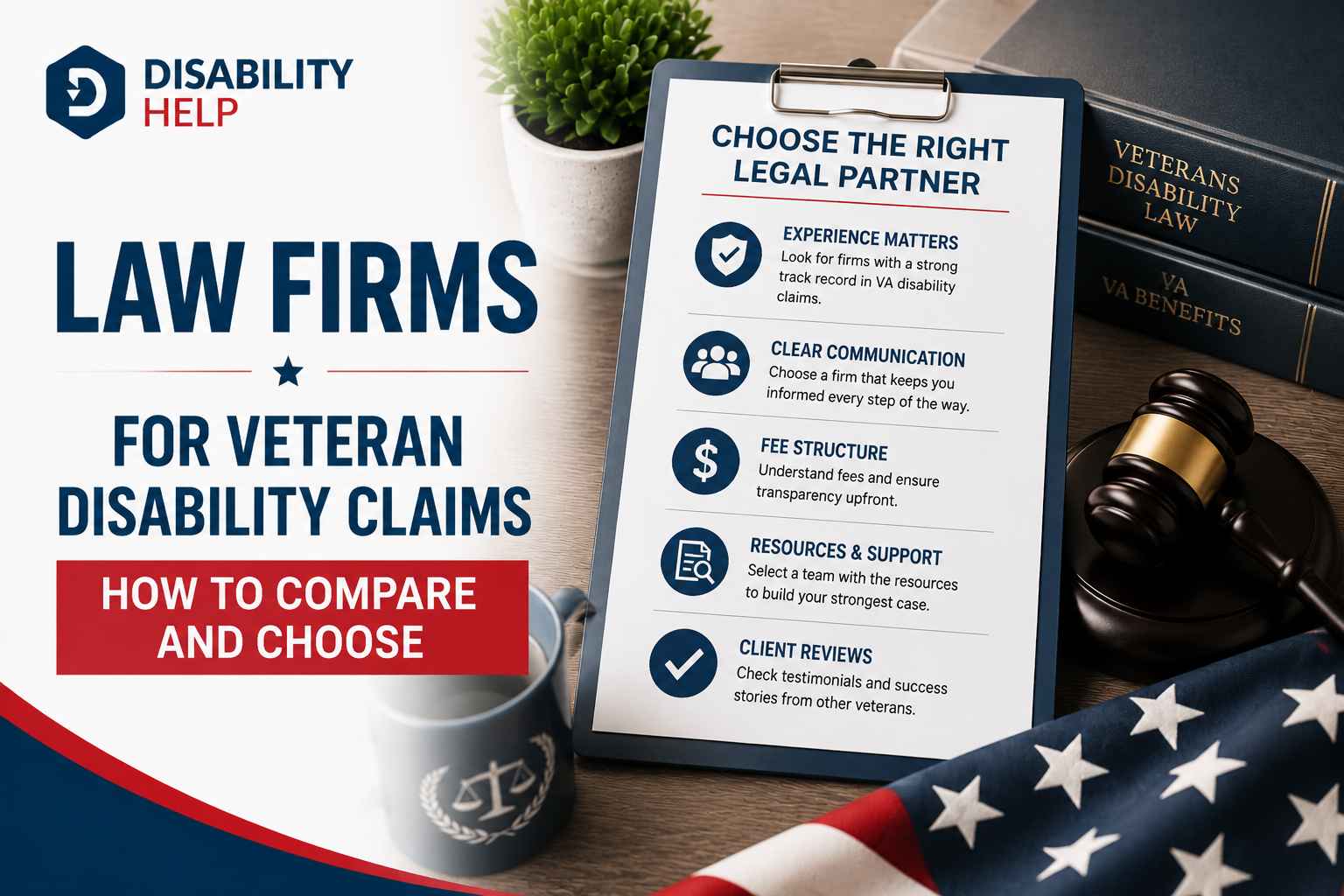
Choosing well comes down to eight practical checks. Work through them in order, and use each firm's free consultation to fill in the gaps.
- Verify VA accreditation. Search the attorney's name on the VA Office of General Counsel roster before you sign. An unaccredited advisor cannot legally file or argue your appeal.
- Match the firm to your condition. Ask about specific experience with your diagnosis, whether that is PTSD, traumatic brain injury, toxic exposure, military sexual trauma, or Total Disability Individual Unemployability.
- Confirm appeal-forum experience. If your case could reach the CAVC or the Federal Circuit, hire a firm that already litigates at those levels, not one that stops at the Regional Office.
- Get the fee agreement in writing. It should state a contingency fee, typically 20% of past-due benefits, and confirm you owe nothing if you do not win.
- Ask who actually handles your case. Large firms assign teams; solo practitioners give direct access but may have less capacity. Decide which model fits you.
- Test communication early. Note how quickly the firm responds and whether it explains the next steps clearly. Appeals can run for years, so responsiveness matters.
- Check geographic fit. Eight of the ten firms here serve nationwide; two are regional. A local firm may know your Regional Office, while a national firm may offer broader capacity.
- Use the free consultation to compare. Many VA disability firms advertise free initial case evaluations, but confirm the consultation terms, eligibility requirements, and any costs directly with the firm. Ask two or three the same questions and compare the answers.
Which appeal lane fits your case?
Your appeal lane shapes both the evidence you need and the firm you should hire. The table below compares the three modernized review options on evidence rules, estimated success, and timeline.
| Appeal Lane | New Evidence Allowed? | Estimated Success | Typical Timeline |
|---|---|---|---|
| Higher-Level Review | No | About 50% (VA does not publish an official figure) | Around 4 to 5 months |
| Supplemental Claim | Yes | About 50% (VA does not publish an official figure) | Around 5 months |
| Board Appeal (BVA) | Depends on option chosen | 37% to 41% grant rate (FY2024) | Often 1 to 2+ years |
A remand is neither a grant nor a denial. It returns your case to the Regional Office for more development, and many remands eventually become grants after that work is done.
How much do VA disability lawyers charge?
Most VA disability lawyers work on contingency and charge 20% of your past-due benefits, the fee the VA treats as presumptively reasonable under 38 C.F.R. § 14.636. They cannot charge you for help with an initial claim. They may charge only for appeals after a denial, and only if you win.
The federal rule sets clear guardrails. A fee of 20% of past-due (back) benefits is presumed reasonable, while a fee above one-third is presumed unreasonable. Fees come out of your past-due benefits only, never your future monthly payments, and the fee agreement must be filed with the VA. If your case reaches the CAVC, the government may pay your attorney's fees separately under the Equal AccessThe principle that all individuals, including those with disabilities, should have equal opportunity...<Access to JusticeEnsuring that individuals with disabilities have equal access to legal representation, courts, and l... Act, which can leave your back pay intact.
This fee structure is also your best defense against fraud. Unaccredited "claim sharks" charge veterans thousands of dollars for help they are not authorized to provide, and any contract you sign with them may be unenforceable. If you encounter a suspicious service, you can report it at ReportFraud.FTC.gov, and you can always confirm a representative's status on the VA accreditation roster first.
When you may not need a paid attorney
You do not always need a paid law firm. Veterans Service Organizations (VSOs) such as the Disabled American Veterans, the Veterans of Foreign Wars, and the American Legion are congressionally chartered nonprofits that represent veterans for free, and they handle many claims and appeals effectively.
A VSO is often enough for an initial claim with strong, clear evidence, or for a Higher-Level Review that only needs to correct an obvious VA error. County Veterans Service Officers file claims at no cost as well. Paid representation earns its fee in harder situations: a denial where you have new medical evidence, a complex condition, a case headed to the Board or the courts, or a large amount of back pay at stake. Reader empowermentThe process of gaining control, authority, and power over one’s life, often used in the context of i... means knowing that free, competent help exists, and choosing paid representation because your case genuinely calls for it.
Key terms every veteran should know
- VA accreditation: Authority granted by the VA that lets an attorney or agent prepare, present, and prosecute your claim. Verify it on the OGC roster.
- NOVA: The National Organization of Veterans' Advocates, a 600+ member group of accredited attorneys and agents. Membership is a voluntary professional signal.
- Contingency fee: A fee paid only if you win, taken as a percentage of your past-due benefits rather than as an upfront charge.
- Past-due benefits: The back pay you are owed from your effective date to the date your award is granted. Attorney fees come from this amount.
- BVA: The Board of Veterans' Appeals, where a Veterans Law Judge reviews your appeal. FY2024 grant rates ran about 37% to 41%.
- CAVC: The U.S. Court of Appeals for Veterans Claims, a federal court that reviews Board decisions. Not every firm litigates here.
- Remand: A decision that sends your case back to the Regional Office for more development. It is neither a win nor a loss.
- TDIU: Total Disability Individual Unemployability, which pays at the 100% rate when service-connected conditions prevent you from working.
- Nexus letter: A medical opinion linking your condition to your service. Its quality is often the single biggest factor in an appeal.
What our review found matters most
In reviewing these ten firms, one pattern stood out: the verifiable credentials cluster tightly, while the marketing claims scatter. Nine of the ten hold VA accreditation, six belong to NOVA, and every firm offers a free consultation. The advertised win rates, by contrast, range from vague "99" graphics to a precise-sounding 98.3%, with no shared definition behind them.
Consider an illustrative case. A veteran denied for PTSD after an initial claim has new evidence: a private nexus letter tying the condition to a documented in-service stressor. A VSO might file the Supplemental Claim competently. An accredited attorney with PTSD appeal experience adds value by framing that nexus letter against the exact reason for denial and, if the Board denies again, carrying the case to the CAVC. The right choice depends on the complexity of the case, not on which firm ran the most ads. This example is illustrative and not a description of any specific client outcome.
Choose Representation Based on Your Case, Not the Advertising
As of 2026, the veterans who get the best results are not the ones who pick the firm with the flashiest numbers. They are the ones who verify accreditation, match the firm to their condition and appeal lane, get the fee in writing, and consider free VSO help before paying. Representation clearly helps, roughly 43% approval with an attorney versus under 30% without, but the current VA disability compensation rates that ride on your rating make the right choice worth the effort.
Before choosing your next step, review our guide to filing a VA disability appeal to understand the evidence, deadlines, and review options that may apply to your case.
Frequently Asked Questions
Do I need a lawyer for a VA disability claim, or can I file on my own?
You can file an initial claim on your own or with a free VSO, and many veterans do. A lawyer becomes most valuable after a denial, especially for complex conditions or cases headed to the Board or the courts, where FY2024 data shows represented veterans win at higher rates.
How much do VA disability lawyers charge?
Most charge a contingency fee of 20% of your past-due benefits, the amount the VA presumes reasonable. They cannot charge for an initial claim, only for appeals, and only if you win. Fees above one-third of back pay are presumed unreasonable under federal rules.
What is the best VA disability law firm?
There is no single best firm for every veteran. The best law firm for your VA disability claim is the accredited firm with proven experience in your condition and appeal lane, transparent fees, and communication that fits your needs. Compare two or three during free consultations.
Can a lawyer help with an initial VA disability claim?
A lawyer can advise you, but accredited attorneys cannot charge a fee for an initial claim under federal law. For a first claim, a free VSO or County Veterans Service Officer is often the practical choice. Paid help typically starts once the VA issues a decision you want to appeal.
How do I check if a VA disability attorney is accredited?
Search the attorney's or agent's name on the VA Office of General Counsel accreditation tool at va.gov/ogc/accreditation.asp. If someone offering paid claim help is not listed, do not sign with them, since only accredited representatives may legally handle your claim.
How long does a VA disability appeal take?
It depends on the lane. A Higher-Level Review runs about four to five months, and a Supplemental Claim about five months, while a Board appeal often takes one to two years or longer. Filing within one year of your decision preserves your effective date and your back pay.