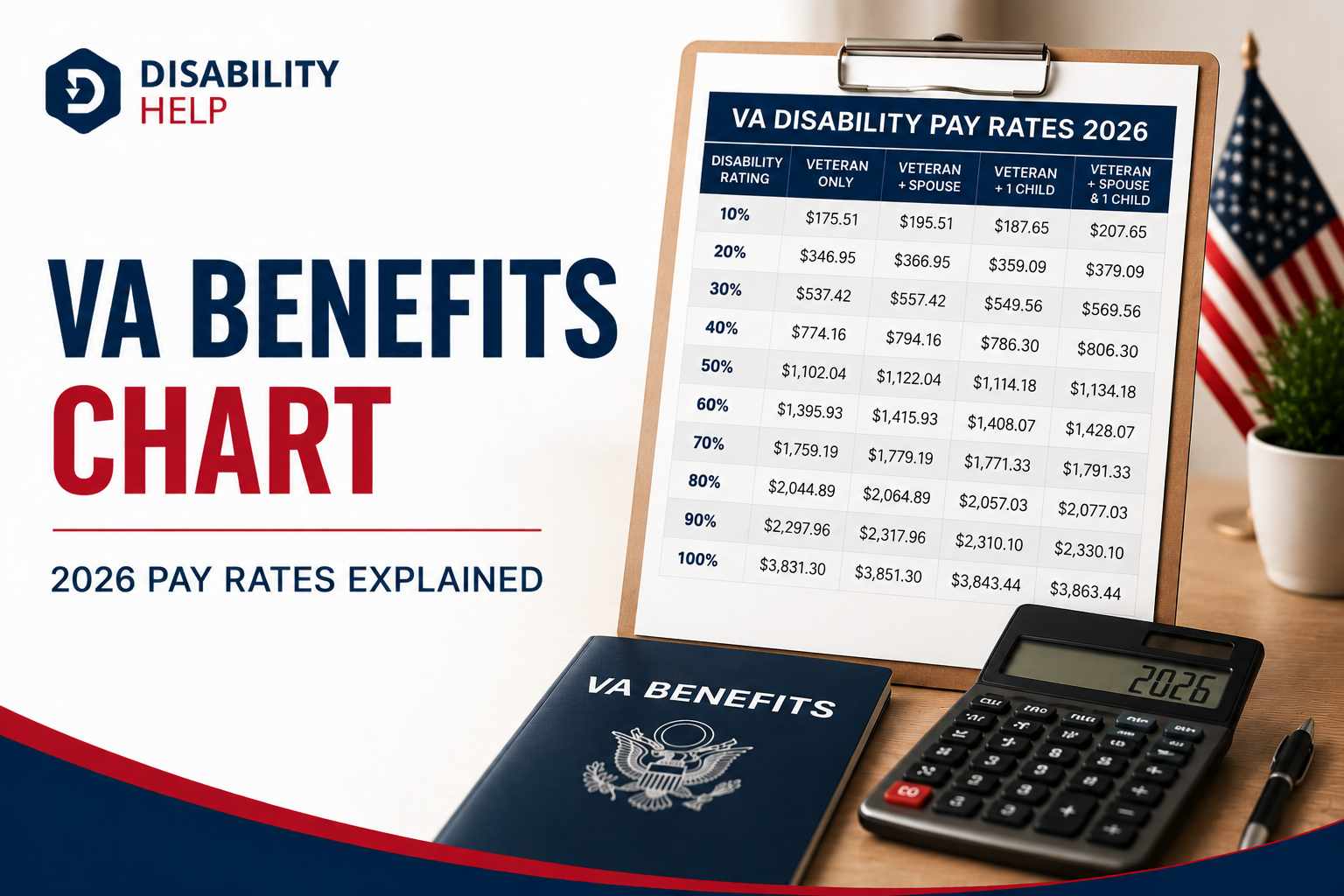

Yes, you can join the reserves with 100 percent disability, but only if you pass a military medical waiverA legal provision that allows states to forego certain requirements of federal law, often used in th... and can still meet physical fitness and deployability standards. Your 100 percent VA rating by itself does not disqualify you. The medical conditions behind that rating are what the Department of Defense actually reviews. A single veteran rated at 100 percent with no dependents receives $3,938.58 per month in 2026, all of it tax-free, so the pay choices tied to reserve service carry real weight.
This guide explains which type of 100 percent rating you hold, how the waiver process works, how the dual-pay law affects your drill checks, and how reserve retirement can let you keep both incomes.
Key Takeaways
- Legal but difficult: You can join the reserves with 100 percent disability, but the medical conditions behind the rating usually require a hard-to-get military waiver.
- Rating type decides everything: A 100 percent schedular rating offers the only realistic path; TDIU and Permanent and Total ratings create near-impossible barriers.
- You cannot get paid twice: Federal law bars collecting military pay and VA compensation for the same day, so reservists waive one or the other using VA Form 21-8951.
- Drill-pay math is close: A single 100 percent veteran waives roughly $8,270 in 2026 VA compensation for 63 drill days, yet military pay is taxable while VA pay is not.
- TDIU and reserve service conflict: Because TDIU pays the 100 percent rate based on unemployability, drilling for pay can trigger a review and the loss of that benefit.
- CRDP restores both at retirement: Reservists who reach 20 years and a 50 percent or higher rating eventually receive full retired pay and full VA compensation with no offset.
Can you legally join the reserves with a 100 percent VA disability rating?
Yes. No federal law bars a veteran with a 100 percent VA disability rating from joining the reserves. The barrier is medical, not legal. The Department of Defense decides whether your specific conditions meet military fitness standards, and a high rating points to conditions that often fall short of those standards.
The key distinction is between your rating and your condition. A VA rating measures how a service-connected injury or illness affects your earning capacity. Military accession standards measure something different: whether you can train, deploy, and perform duties without harm to yourself or your unit. You can hold a 100 percent rating for a condition that has since stabilized, and still be found fit. You can also hold a rating for a condition that remains disqualifying. The Department of Veterans Affairs reserve benefits page confirms that part-time service members keep access to VA disability compensation, which tells you the two systems run on parallel tracks rather than canceling each other out.
If you have a break in service, you re-enter through a Military Entrance Processing Station (MEPS). A 100 percent rating will almost certainly flag you for medical review, and you will need a waiver to move forward. If you transition straight from active duty into the reserves without a break, you may or may not require a new MEPS screening depending on your break in service and accession pathway. Either way, the underlying medical picture drives the outcome. If you need to establish or update your rating first, our guide on how to file a VA disability claim walks through the documentation that supports a strong record.
The three types of 100 percent ratings and what each means for reserve service
Not every 100 percent rating is treated the same way for reserve eligibility. The VA assigns total disability through three classifications, and each one changes your odds of serving. The version that permits employment is the version that keeps the door open.
100 percent schedular is the path with the best chance. This rating means your service-connected conditions combine to 100 percent using the VA's Combined Ratings Table, often called VA math. A schedular rating permits you to work, and it can be temporary, such as during active cancer treatment or a severe mental health episode, or permanent. A veteran with a temporary schedular rating for a condition that has improved has the most viable route, provided they can pass the fitness test and perform their duties.
Total Disability based on Individual Unemployability (TDIU) pays at the 100 percent rate even when the combined schedular rating is lower, for example, 70 percent. The VA grants TDIU specifically because service-connected conditions prevent substantially gainful employment. Reserve service is employment. Drilling for pay can directly contradict the basis of the award and put the benefit at risk.
100 percent Permanent and Total (P&T) means medical evidence shows the total disability is reasonably certain to continue for life without improvement. A veteran with a schedular P&T rating is technically allowed to work, but the permanent severity that earns a P&T designation makes passing military medical standards highly improbable.
The table below compares the three at a glance.
| Rating Type | Basis for 100% Pay | Work Allowed? | Reserve Feasibility |
|---|---|---|---|
| 100% Schedular | Conditions combine to 100% using VA math | Yes | Possible, if you stay physically fit and deployable |
| 100% TDIU | Conditions prevent gainful employmentWork that provides a living wage and is within the capacity of an individual, including those with d... | No (marginal work only) | Very unlikely; serving contradicts unemployability |
| 100% Permanent & Total | Total disability is expected to last for life | Yes, if schedular | Extremely difficult given the severity required |
How the military medical waiver process actually works
A VA rating does not automatically disqualify you, but the conditions that justify a 100 percent rating usually violate the military's accession standards. DoD Instruction 6130.03 sets the medical standards for appointment and enlistment, and conditions such as severe mental health disorders, major loss of range of motion, traumatic brain injury, or chronic systemic disease are generally disqualifying. Clearing them requires a waiver.
Waivers are reviewed independently of your VA rating. There is no single rating number that automatically blocks you. The decision turns on the type of condition, its current severity, and whether you can serve without risk to yourself or your unit. Army Directive 2018-12, for example, requires a waiver for any applicant previously separated for a medical reason, with or without a disability rating. The Service Medical Waiver Review Authority then weighs your full record.
Here is the path most prior-service applicants follow:
- Contact a recruiter for your target branch and explain your rating and conditions up front.
- Process through MEPS again if you have a break in service, where the 100 percent rating will flag you for medical review.
- Gather current medical evidence, including notes from your treating physicians stating the condition is controlled and that you can serve.
- Submit the medical waiver request through your recruiter for the disqualifying conditions.
- Wait for the Service Medical Waiver Review Authority decision, which is made case by case.
Set realistic expectations. Approval for severe conditions has historically been difficult, and some reports on reserve component accessions have shown waiver approval rates vary significantly by branch and medical condition, and can be difficult to obtain for severe disqualifying conditions. A recruiter who knows your branch's current standards is your most useful guide, and much of the legwork, such as collecting medical records, can only be done by you.
Dual compensation: why you cannot collect VA pay and drill pay on the same day
Federal law prohibits receiving military pay and VA disability compensation for the same day of service. Title 38 of the U.S. Code, Section 5304, together with Title 10, Section 12316, blocks this duplication, often called the bar on concurrent receipt. It applies whether the pay comes from active duty or inactive duty training.
Because traditional reservists serve part-time, you do not suspend your VA benefits entirely. Most drilling members are paid for about 63 days per fiscal year, built from 48 Unit Training Assemblies and 15 days of Annual Training. You waive a prorated portion of either your military pay or your VA compensation for the days you serve. Each fiscal year, the VA sends VA Form 21-8951, Notice of Waiver of VA Compensation or Pension to Receive Military Pay and Allowances, and you declare which pay you give up. This is now an annual requirement, not a one-time election.
Both payments are prorated on a 30-day month, so one service day equals 1/30th of your monthly VA compensation. For a single 100 percent veteran in 2026, the daily VA rate is about $131.29. Waiving 63 days costs roughly $8,270 in VA compensation across the year. In most cases, keeping drill pay and waiving VA compensation comes out ahead, but the gap is narrow, and military pay is taxable while VA compensation is tax-free. Run your own numbers at your rank and rating before you decide. If you move to full-time status, such as Active Guard Reserve or a Title 10 activation, you must suspend VA compensation entirely to avoid a debt to the government.
Key terms every veteran should understand before enlisting
Reserve service with a disability rating comes with its own vocabulary. These are the terms that decide your eligibility and your pay.
- Schedular rating: a rating built by combining your individual service-connected conditions to a total percentage using the VA's Combined Ratings Table.
- TDIU: Total Disability based on Individual Unemployability, which pays the 100 percent rate because your conditions prevent substantially gainful work, even if your combined rating is lower.
- Permanent and Total (P&T): a total rating that medical evidence shows will not improve over your lifetime.
- Concurrent receipt: the general rule against drawing military pay and VA disability compensation for the same day of service.
- Marginal employment: work that earns below the federal poverty threshold or sits in a protected setting, which can preserve TDIU.
- CRDP: Concurrent Retirement and Disability Pay, the retirement exception that restores both military retired pay and VA compensation in full.
- MEPS: the Military Entrance Processing Station, where prior-service applicants are medically screened before re-entry.
CRDP: How 20 years of reserve service lets you keep both incomes
Concurrent Retirement and Disability Pay (CRDP) is the major exception to the dual-pay rule. It lets eligible military retirees receive full military retired pay and full VA disability compensation at the same time, with no offset. For a reservist who builds a career while rated at 100 percent, CRDP is the long-term payoff.
To qualify for CRDP, a reserve retiree must complete 20 or more years of creditable service, be in receipt of retired pay (which for non-regular retirees usually begins at age 60), and receive military retired pay and hold a VA service-connected rating of 50 percent or greater. The Defense Finance and Accounting Service applies CRDP automatically, with no application required, and a retiree rated at 100 percent receives full concurrent receipt. From that point, you no longer waive any portion of your VA compensation.
CRDP is taxable in the same way as your retired pay, while your VA compensation stays tax-free. A reservist who reaches 20 qualifying years with a 100 percent rating moves from waiving compensation during their drilling years to collecting both full incomes once retired pay begins. That shift is one of the strongest financial reasons to weigh a long reserve career against the short-term cost of waiving compensation now.
A realistic scenario: weighing the decision at 100 percent
Consider an illustrative example rather than a guaranteed outcome, since every determination is individual. A 34-year-old veteran holds a temporary 100 percent schedular rating tied to treatment for a condition that her doctors now consider stable. She wants to return to the reserves to reach 20 years and lock in a retirement.
Her rating type works in her favor, because a schedular rating permits employment, and her condition has improved. She still has to clear MEPS and a medical waiver, so she gathers current physician statements confirming she can train and deploy. She accepts that the waiver may be denied and that the decision rests with the review authority. On the pay side, she calculates that waiving about $8,270 in annual VA compensation for her drill days is worth it, because reaching 20 years sets up CRDP and full concurrent receipt at retirement.
Her situation also shows why the benefits and rights questions rarely stand alone. A veteran in this position may be weighing VA compensation, military pay, and future retirement at once, and some pair these with Social Security Disability benefits when their conditions also affect civilian work. Because one wrong election can cost thousands of dollars or a benefit, a free consultation with an accredited Veterans Service Officer or a VA-accredited attorney is a reasonable step before you sign anything.
Can You Join the Reserves With a 100% VA Disability Rating?
Joining the reserves with 100 percent disability is difficult, but it is not legally impossible. The rating is not the obstacle. The medical conditions behind it are, and clearing them takes a waiver that the Department of Defense grants case by case. Veterans with a 100 percent schedular rating who stay fit and deployable have the strongest chance, while TDIU and Permanent and Total ratings face steep barriers.
As of 2026, the financial stakes are higher than ever, with a single 100 percent rating worth $3,938.58 a month tax-free, so every pay election deserves careful math and, where the situation is complex, professional guidance.
To map your options across VA compensation, reserve pay, and future retirement, start by understanding disabilities for veterans navigating challenges and support.
Frequently Asked Questions
Does joining the reserves cancel my VA disability?
No. Joining the reserves does not cancel your VA disability rating. You keep the rating, but you cannot be paid both military pay and VA compensation for the same day. You waive a prorated portion of one each year using VA Form 21-8951, and you can resume full compensation when you are not on paid duty.
Can you have a 100 percent VA rating and still work?
Yes, if the rating is schedular. A 100 percent schedular rating is based on the severity of your conditions and permits gainful employment, including reserve service. A TDIU rating is different, because it pays the 100 percent rate specifically on the basis that you cannot maintain substantially gainful work.
Will I lose TDIU if I join the reserves?
Quite possibly. TDIU pays the 100 percent rate because your service-connected conditions prevent substantially gainful employment. Drilling for military pay can show the VA that you are employable and trigger a review. Marginal or protected work below the federal poverty threshold may be allowed, but routine paid reserve duty usually is not.
How many days do reservists get paid for each year?
A traditional reservist is typically paid for about 63 days per fiscal year. That figure comes from 48 Unit Training Assemblies, which are the four drill periods across a normal drill weekend each month, plus 15 days of Annual Training. Deployments, mobilizations, and extra duty add more paid days on top of that baseline.
Can I keep my VA disability after I retire from the reserves?
Yes, and at retirement, the rules improve. Through Concurrent Retirement and Disability Pay (CRDP), a reserve retiree with 20 qualifying years and a 50 percent or higher rating receives full military retired pay and full VA compensation with no offset once retired pay begins, usually at age 60. A 100 percent rating qualifies automatically.