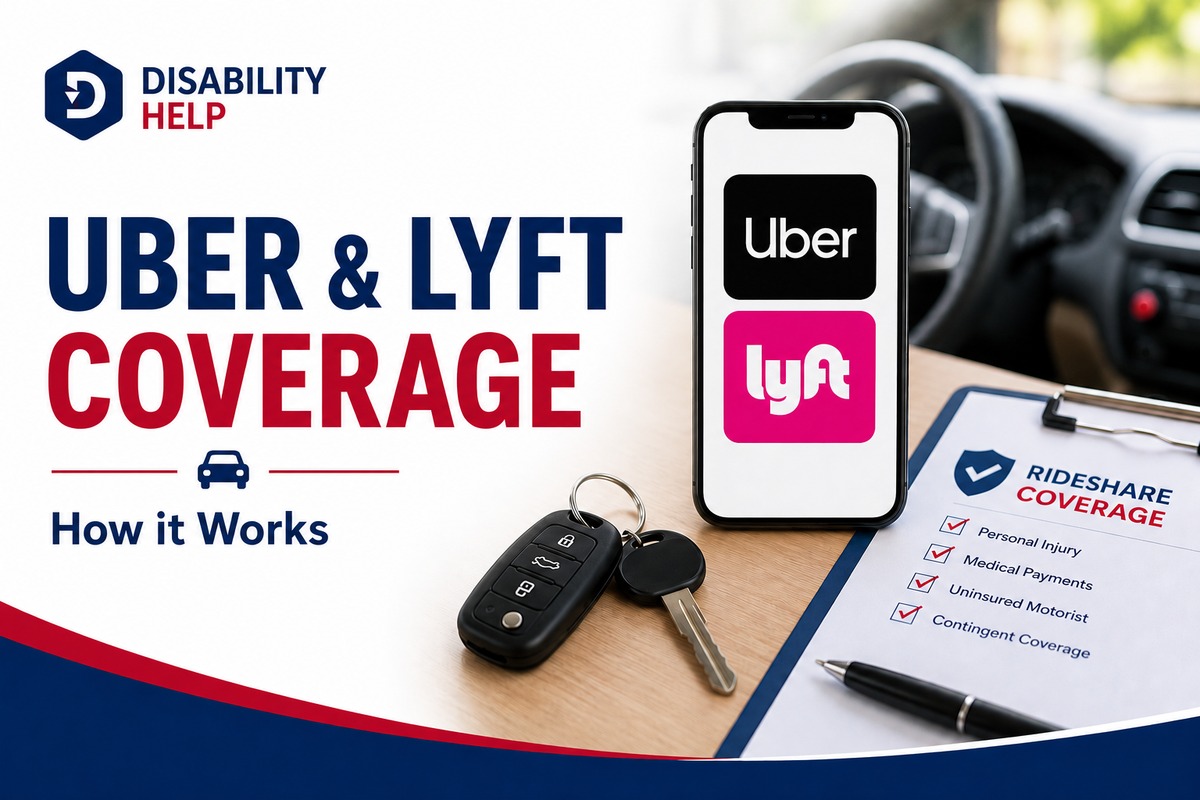
Yes, MedicaidA U.S. government program that provides health coverage to eligible low-income individuals, includin... does cover Uber and Lyft for non-emergency medical transport in many states through a program called Non-Emergency Medical Transportation (NEMT). Under federal law, state Medicaid programs must provide NEMT to any eligible beneficiary who has no other way to reach a covered medical appointment. According to the Centers for Medicare & Medicaid Services, this mandate was codified and strengthened by Section 209 of the Consolidated Appropriations Act of 2021.
In recent years, Uber and Lyft have entered the NEMT space through specialized healthcare platforms: Uber Health and Lyft Healthcare. These are not the consumer apps most people use daily. They operate through a broker system that arranges and pays for rides on behalf of Medicaid agencies. That means you do not need a smartphone or a credit card to use them.
In this guide, you will learn exactly who qualifies, how the booking process works, what each platform offers, and what limitations to expect in 2026.
Key Takeaways
- Medicaid covers Uber and Lyft rides: Federal law requires state Medicaid programs to provide NEMT for eligible beneficiaries with no other transportation access.
- You do not use a consumer app: Rides are arranged through state-contracted brokers, not the Uber or Lyft app, so no smartphone or credit card is required.
- Uber Health is active in 28 states: Uber Health covers approximately 78% of Medicaid members in those states through broker and health plan partnerships.
- Lyft Healthcare is enrolled in 21 states: Lyft operates as a direct Medicaid provider in 21 states and has reported reducing partner transportation costs by an average of 32%.
- Advance scheduling is required: Most states require rides to be booked 48 hours to 3 days in advance through the Medicaid broker, not on demand.
- Rideshare fills a critical gap: Studies show rideshare-based NEMT reduces patient no-shows by up to 20%, improving health outcomes for Medicaid beneficiaries.
What Is Non-Emergency Medical Transportation (NEMT)?
Non-Emergency Medical Transportation is a Medicaid benefit that pays for rides to and from medical appointments when a beneficiary has no other way to get there. It covers situations where public transportation is unavailable, a patient cannot drive, or no family member or caregiver is able to provide transport. The word "non-emergency" simply means the patient does not need an ambulance. It does not mean the trip is optional.
NEMT covers a wide range of medical destinations, including primary care offices, specialist appointments, hospitals, dialysisA treatment that removes waste and excess fluid from the blood when the kidneys are no longer able t... centers, mental health providers, dental offices, and pharmacies. The key requirement is that the appointment must be for a Medicaid-covered service.
The legal foundation for NEMT goes back decades, but Congress formally added NEMT to the Medicaid statute through Section 209 of the Consolidated Appropriations Act of 2021. That same law set driver requirements: a valid driver's license, no exclusion from federal healthcare programs, and full disclosure of driving history and traffic violations. States have flexibility in how they deliver NEMT. Most use one of three models: fee-for-service, managed careA healthcare delivery system designed to manage cost, utilization, and quality, often involving netw... plans, or contracted transportation brokers.
How Uber and Lyft Fit Into the Medicaid NEMT System
Uber and Lyft do not act as direct-to-consumer Medicaid providers. You cannot open the Uber app, request a ride, and expect Medicaid to pay for it. Instead, both companies operate through the existing NEMT broker infrastructure via specialized, HIPAA-enabled platforms: Uber Health and Lyft Healthcare.
In most states, Medicaid NEMT is managed by contracted transportation brokers such as Modivcare or Verida. When you need a ride, you contact the broker. The broker verifies your Medicaid eligibility, confirms the medical necessity of the appointment, and then dispatches the most cost-effective transportation. For ambulatory patients with no special equipment needs, that is often an Uber or Lyft driver.
Because this is a business-to-business arrangement, the patient experience looks different from a standard rideshare trip. You receive driver and vehicle information through a text message or a phone call to a landline, not through an app. The ride is paid for directly by the Medicaid program or broker. There is typically no copayment, or a minimal one of $1 to $2, depending on your state.
According to a 2021 RAND Corporation study, rideshare-based NEMT is most effective for urban rides, on-demand situations, and cases where a scheduled vehicle fails to arrive. The research confirmed cost advantages for ambulatory patients compared to specialized medical vehicles or shared-ride vans.
Uber Health vs. Lyft Healthcare: How the Two Platforms Compare
Both platforms are built for healthcare coordinators and NEMT brokers, not individual consumers. They share the same goal but operate with meaningful differences in structure, coverage, and available services.
| Feature | Uber Health | Lyft Healthcare |
| Medicaid Role | Works with brokers and health plans | Direct enrolled provider in 21 states |
| Coverage Area | Approved in 28 states (78% of Medicaid members) | Available in 21 states (62% of Medicaid beneficiaries) |
| Wheelchair Access | Uber WAV available in select cities | Standard curb-to-curb transport |
| Door-to-Door Support | Third-party NEMT option (24-hr advance booking) | Lyft Assisted: trained drivers provide light physical support |
| Delivery Services | Prescriptions, groceries, OTC items | Transportation only |
| Language Support | 15+ languages | Not specified |
| Reported Cost Savings | Not reported | Average 32% reduction in transport costs |
Uber Health
Uber Health is a HIPAA‑enabled ride coordination platform that allows healthcare organizations and NEMT brokers to schedule non‑emergency medical transportation for patients without the need for the Uber consumer app. It is available in the United States wherever Uber operates, enabling access to NEMT services through participating providers and brokers rather than through direct individual enrollment by Medicaid members. In addition to standard ambulatory rides (UberX), the platform offers Uber Comfort for riders needing extra legroom and wait time, and Uber WAV for wheelchair-accessible transport in select cities.
Uber Health also coordinates prescription delivery through ScriptDrop, grocery delivery, and over-the-counter item delivery, making it a broader healthcare logistics tool. The platform supports communication in over 15 languages.
Lyft Healthcare
Lyft Healthcare has taken a different path by enrolling directly as a Medicaid provider in 21 states, covering over 62% of Medicaid beneficiaries, according to Lyft Business. Lyft Healthcare partners with 10 of the largest U.S. health systems and 10 of the largest NEMT brokers. Its standout feature is Lyft Assisted, a door-to-door service where drivers receive specialized training to offer light physical support, such as offering an arm or opening doors, for patients who need a little extra help.
Lyft Healthcare also offers Lyft Concierge, a web-based tool allowing care coordinators to book and monitor rides in real time without requiring the patient to have the Lyft app. The platform has reported an average 32% reduction in transportation costs for its healthcare partners.
Who Qualifies for Medicaid NEMT and Rideshare Rides?
Eligibility for Medicaid NEMT, including rides fulfilled through Uber or Lyft, depends on four requirements. All four must be met at the same time. Missing even one can result in a denied request.
| Requirement | What It Means for You |
| Medicaid Enrollment | You must be actively enrolled in a state Medicaid program that includes NEMT coverage. |
| No Other Transportation | You must lack access to public transportation or a working private vehicle. |
| Medically Necessary Trip | The ride must be to a Medicaid-covered service: doctor visits, hospital appointments, dental care, pharmacy, dialysis, etc. |
| Ambulatory Status | Standard Uber and Lyft rides are for patients who can walk and do not require specialized medical equipment. |
If you need a wheelchair-accessible vehicle, your broker can still request a rideshare option. Uber WAV is available in select cities through Uber Health. If no accessible rideshare vehicle is available in your area, the broker should arrange an alternative, such as a specialized NEMT van. If you believe you have been improperly denied NEMT, you have the right to appeal. For a broader look at Medicaid rights and how the program interacts with disability benefitsFinancial assistance provided to individuals who are unable to work due to a disability, such as Soc..., see our guide on what Medicaid covers for people with disabilities.
How to Book a Medicaid Uber or Lyft Ride: Step by Step
You do not call Uber or Lyft directly. The booking process runs through your state's NEMT broker. Here is how it works from start to finish.
- Contact your state's NEMT broker or transportation manager. Most states have a single phone number or online portal for NEMT requests. If you do not know who your broker is, call your Medicaid managed care plan or your state Medicaid office and ask.
- Provide your Medicaid ID and appointment details. The broker will verify your eligibility and confirm that the trip is to a Medicaid-covered service. Some states require a provider authorization form, such as the PT-1 form used in Massachusetts.
- Schedule the ride well in advance. Most states require 48 hours to 3 days' notice. Urgent, same-day requests may not be accommodated through the standard NEMT system, though some brokers offer on-demand dispatch for specific situations.
- Receive your ride confirmation. Once the broker dispatches a ride, you will receive the driver's name, vehicle make and model, and license plate number by text message or phone call. No app is required.
- Take the ride. The driver picks you up and takes you to the approved medical facility. Medicaid pays the fare directly. You may owe a small copayment of $1 to $2, depending on your state, but most NEMT rides have no out-of-pocket cost.
- Return trip. If you need a return ride, arrange this at the same time as your outbound trip. Some brokers can also dispatch a return ride while you are at your appointment if the timing is uncertain.
One important note: the broker dispatches the most cost-effective option, which is often an Uber or Lyft for ambulatory patients. You may not always know in advance which type of vehicle will arrive. If you have specific accessibilityThe design of products, devices, services, or environments to be usable by people with disabilities.... needs, make those clear when you call.
Real-World Impact: What the Research Shows
The results of integrating rideshare into Medicaid NEMT have been measurable. Studies indicate that implementing rideshare-based Non-Emergency Medical Transportation (NEMT) can significantly reduce appointment no-shows and result in a significant improvement in patient satisfaction after implementing Lyft Assisted.
Patients generally prefer rideshare over traditional shared-ride NEMT vans. The most common complaints about traditional vans include long wait times, multiple stops, and unpredictable scheduling. Rideshare vehicles tend to be faster and more direct, particularly for urban trips.
Rural areas present a different story. Patients in rural counties, where hospital closures have forced people to travel long distances for specialty care such as cancer treatment, have come to rely on rideshare as a transportation lifeline. A 2024 KFF Health News report documented patients in Georgia relying on Lyft to travel to Atlanta for medical care that was no longer available locally.
There are real limitations, however. Drivers in the B2B system rarely receive tips through third-party bookings, which can affect driver availability and service quality in some markets. The requirement to book days in advance through a broker limits the usefulness of rideshare for urgent but non-emergency medical needs. And the digital divide remains a concern: while no smartphone is required, navigating automated phone systems can be difficult for some older adults or people with cognitive limitations.
What Federal Medicaid Changes Could Mean for NEMT Coverage in 2026
As of 2026, proposed federal Medicaid funding cuts and restructuring are being discussed in Congress. According to Modern Healthcare, potential Medicaid reductions could disrupt Lyft and Uber's healthcare expansion plans. NEMT is a mandated benefit under federal law, but if states receive less federal Medicaid funding through block grants or per-capita caps, some may look for ways to limit NEMT scope or shift costs to beneficiaries.
For now, NEMT remains a protected Medicaid benefit. If you are currently using NEMT or expecting to need it, document your medical transportation needs with your healthcare provider. A written record of medical necessity from your doctor strengthens any NEMT request and any appeal if a ride is denied.
If your disability situation involves more than just transportation, and you are also navigating SSDI, SSI, or workers' compensation, our guide on how Medicaid interacts with SSDI benefits explains how the two programs work together.
Key Terms in Medicaid NEMT You Should Know
Non-Emergency Medical Transportation (NEMT): A federally mandated Medicaid benefit that pays for transportation to medical appointments for beneficiaries who have no other means of getting there.
Transportation Broker: A company contracted by a state Medicaid agencyThe capacity of individuals with disabilities to act independently and make their own choices. to manage and coordinate NEMT services. Examples include Modivcare and Verida. Brokers verify eligibility, confirm medical necessity, and dispatch rides.
Uber Health: A HIPAA-compliant platform from Uber designed for healthcare coordinators and NEMT brokers. Active in 28 states. Offers standard, wheelchair-accessible, and delivery services. Works through brokers, not directly with patients.
Lyft Healthcare: A HIPAA-compliant platform from Lyft. Directly enrolled as a Medicaid provider in 21 states. Includes Lyft Assisted (door-to-door with trained drivers) and Lyft Concierge (coordinator booking tool).
Lyft Assisted: A specialized Lyft Healthcare service where drivers are trained to provide light physical support for patients who need help getting in and out of vehicles or navigating from door to car.
HIPAA-Compliant: A platform that meets federal Health InsuranceA system for paying for medical services, often covering preventive, diagnostic, and treatment costs... Portability and Accountability Act standards for protecting patient health information. Required for any service that handles medical scheduling or patient data.
Medical Necessity: A standard used by Medicaid and brokers to confirm that a trip is to a covered healthcare service. Cosmetic appointments, social visits, and non-medical errands do not qualify.
Frequently Asked Questions
Can I just use the regular Uber or Lyft app and have Medicaid pay for it?
No. Standard consumer Uber and Lyft rides are not covered by Medicaid. To receive a Medicaid-funded ride, you must go through your state's NEMT broker. The broker arranges the ride and pays Uber or Lyft directly through the Uber Health or Lyft Healthcare platform. You never interact with the app or pay anything yourself beyond any applicable copayment.
What if my state does not have Uber Health or Lyft Healthcare?
Uber Health is approved in 28 states and Lyft Healthcare in 21 states as of 2026. If neither platform is active in your state, your NEMT broker will arrange transportation through other vendors: wheelchair-accessible vans, taxis, volunteer driver programs, or other contracted providers. Contact your state Medicaid office or NEMT broker to find out what is available in your area.
Do I need a smartphone to use Medicaid NEMT rideshare rides?
No. The B2B system does not require you to have the Uber or Lyft app. Ride details, including driver name, vehicle information, and license plate number, are communicated by text message or a phone call to a landline. The broker manages all app interaction on the back end.
How far in advance do I need to schedule a Medicaid NEMT ride?
Most states commonly require 48 hours to 3 days' advance notice. The exact requirement depends on your state and your NEMT broker. Call your broker as early as possible, especially for specialist appointments or procedures that have a fixed time. Same-day requests are generally not available through the standard NEMT system, though some brokers have on-demand capacity for specific situations.
Does Medicaid NEMT cover rides to mental health appointments?
Yes. Mental health provider visits, therapy appointments, psychiatric consultations, and substance use treatment are all covered medical services under Medicaid. If the appointment is medically necessary and Medicaid-covered, NEMT applies. Tell your broker the type of appointment when you call so the appropriate vehicle and service level can be arranged.
What happens if the Uber or Lyft driver does not show up?
Contact your NEMT broker immediately. The broker is responsible for ensuring you reach your appointment. Most brokers have a process for dispatching a backup vehicle when a primary driver fails to arrive. Document the situation by noting the time, the broker reference number, and any confirmation you received. If missed rides are a recurring problem, you have the right to file a complaint with your state Medicaid office.
The Bottom Line on Medicaid NEMT Coverage for Uber and Lyft
Medicaid does cover Uber and Lyft for non-emergency medical transport, but not through the apps most people know. The coverage runs through a structured broker system that verifies your eligibility, confirms medical necessity, and dispatches a ride on your behalf. Uber Health operates in 28 states; Lyft Healthcare operates in 21. As of 2026, both platforms continue to expand their reach and report meaningful improvements in patient attendance and transportation costs for healthcare partners.
If you qualify for Medicaid NEMT, the first step is identifying your state's transportation broker. Call your Medicaid managed care plan or your state Medicaid office and ask for the NEMT contact number. Schedule as far in advance as possible, bring your Medicaid ID, and confirm your appointment details when you call.
Understand Your Disability Rights in Public Transportation
Laws like the Americans with Disabilities Act (ADA)A U.S. law that prohibits discrimination against individuals with disabilities in all areas of publi... ensure equal accessThe principle that all individuals, including those with disabilities, should have equal opportunity... to public transit for people with disabilities. Public and private transport providers must offer accommodationsModifications or adjustments in healthcare settings to support patients with disabilities. for independent travel. Learn more about your rights and how they apply to public transit.